
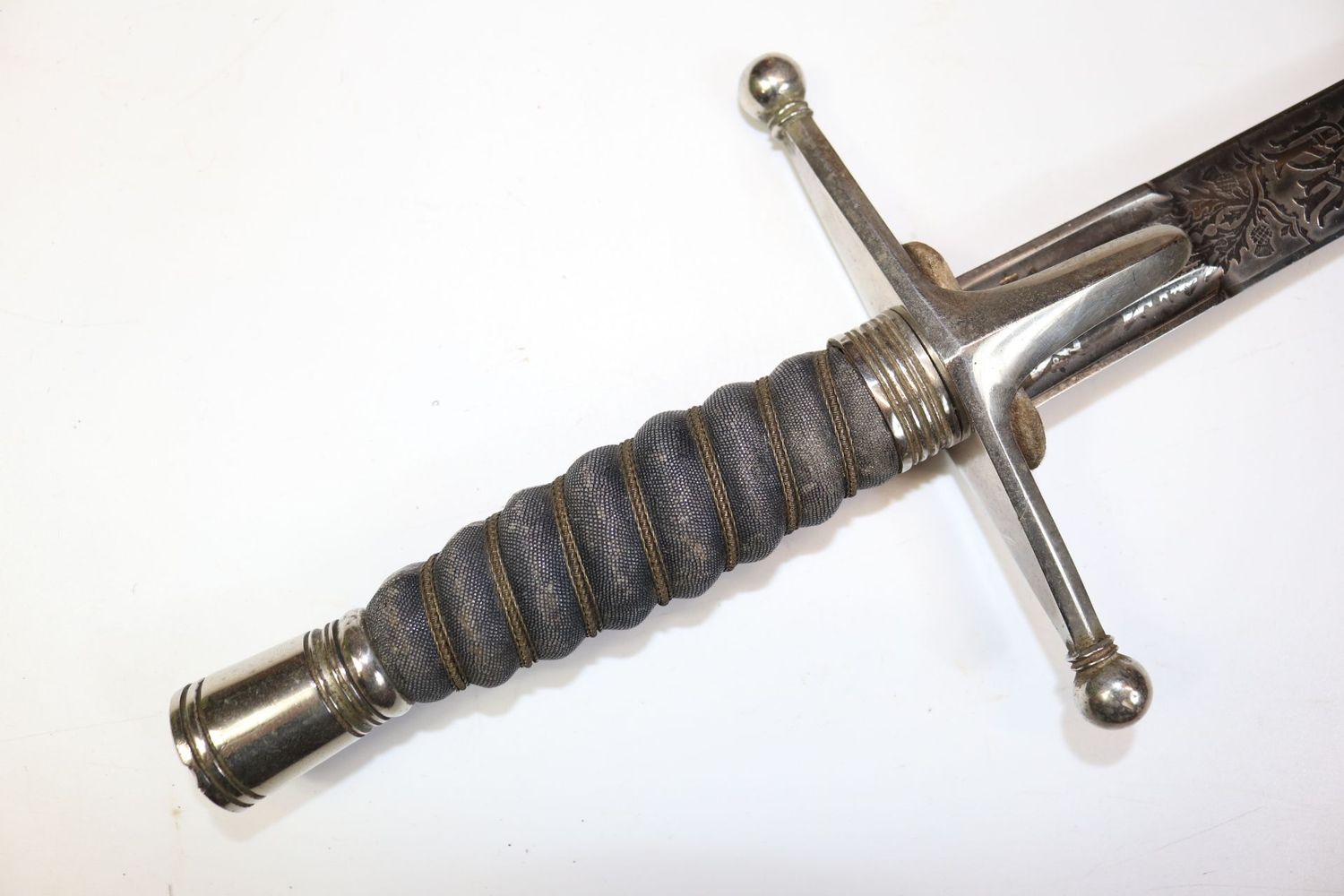
Wilkinson Highland Light Infantry Broadsword to WW2 Dunkirk Military Cross Winner
EL7380 - The Wilkinson Highland Light Infantry officer's broadsword of Second Lieutenant Philip Douglas Ronald Kindersley. Numbered 66818 for 1938, when Kindersley commissioned as an officer. Kindersley is best noted in the records for his actions during the 1940 Allied retreat to Dunkirk, for which he was awarded the Military Cross (M.C.). His leadership and courage during the defensive operations helped cover the retreat of Allied troops facing overwhelming German forces. Kindersley transferred to the Reconnaissance Corps, but sadly died in service in March 1941. His medals sold separately at auction in April 2026. I have copied a text about Kindersley from the medal auction at Noonan's of Mayfair below (credit to Noonan's for the text).
The sword came to me in a rather neglected state and covered in varnish and dirt, and has been carefully and sympathetically cleaned, so that it is now in good overall condition, with a bright blade and mostly clear etching, which include Kindersley's etched initials and family crest, as well as all the normal regimental etching and maker's name. The guard and pommel are plated and in good condition, as is the grip with all its original shagreen and wire in place and tight. The hilt is firm on the tang (the pommel unscrews to allow switching to a basket hilt) and the leather washer is the original one. Currently there is no scabbard with this sword, as it came to me like this, but as this is a straight blade and the current Highland scabbards are still regulation, the future owner could purchase a modern replacement. This is a desirable and relatively scarce pattern of sword, by Wilkinson, being the best maker of the day, and with fantastic provenance and research potential. Swords to Dunkirk MC winners do not come around very often.
M.C. London Gazette 22 October 1940.
When the Reconnaissance Corps was formed in January 1941, Lieutenant Kindersley was appointed to command C Squadron of 42nd Reconnaissance Regiment, in the acting rank of Captain. However, his promising career was brought to an abrupt close when a bout of scarlet fever developed into meningitis. He died at Ipswich Isolation Hospital in March 1941.